
If you’ve looked at a concentrates menu lately, you’ve probably run into a small naming problem: resin, live resin, rosin, live rosin, cured resin. They sound close enough to be interchangeable. They aren’t.
Here’s the good news: once you understand two simple ideas, the whole list makes sense.
- How was it extracted? (Solvent-based vs. solventless)
- What did the plant material look like going in? (Dried and cured vs. fresh-frozen)
That’s it. Every term on this list is just a combination of those two answers.
What is Resin?
Cannabis plants make a sticky substance called resin. It’s found in trichomes — the tiny, crystal-like structures on the plant. This natural resin holds most of the plant’s flavor and aroma.
When you see “resin” on a concentrate menu, it usually refers to a concentrate made with a solvent. The exact starting material can vary, which is why “cured resin” and “live resin” are more specific labels.
A solvent is a substance used to pull cannabinoids and aromatic compounds from the plant before being removed during processing. Most resin starts from flower that’s already been dried and cured, the normal way cannabis is prepared after harvest.
Resin isn’t one specific texture. It can end up as wax, badder, sauce, or other forms. Think of “resin” as describing how it was made, not what it looks like.
What Makes Live Resin “Live”?
This is the part that trips people up.
“Live” doesn’t mean the product is fresher on the shelf. It indicates how the plant was handled before extraction.
Normally, after harvest, cannabis is dried and cured. That takes time. For live resin, the plant skips that step. It’s frozen soon after being cut and often within hours.
Why does that matter? Freezing helps preserve more of the plant’s original aromatic compounds before extraction. Drying and curing can cause some of that to fade. That’s one reason live resin is often associated with a stronger, more pronounced aroma and flavor profile.
One more thing worth remembering: a live resin bought today isn’t “fresher” than a cured resin bought today. Both have been sitting on the shelf for a while. “Live” just tells you what happened to the plant a long time before it reached the store.
What Makes Something “Cured”?
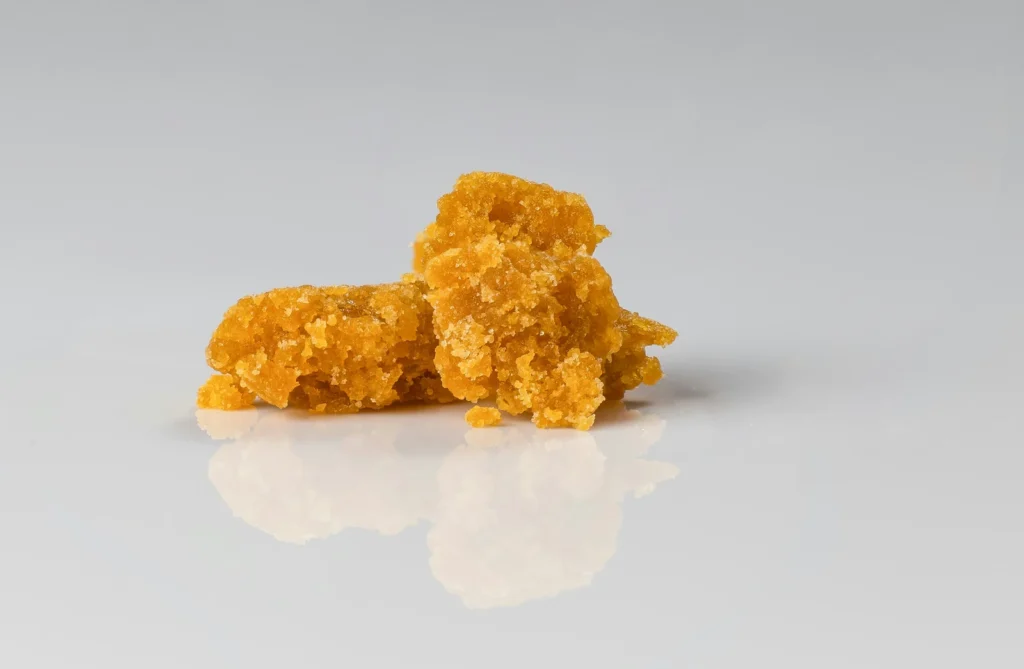
We covered what “live” means, so it’s only fair to explain “cured” the same way.
After harvest, cannabis is normally dried and cured before it becomes the flower you see on a dispensary shelf.
Drying comes first. The harvested plant is dried slowly, usually over several days, in controlled conditions. This removes excess moisture without drying the flower too quickly.
Then comes curing. The dried flower is stored for a period of time, often in sealed containers, while its moisture and other characteristics continue to settle. Depending on the process, curing can take anywhere from a couple of weeks to a couple of months.
Curing isn’t just an extra step added at the end. It’s part of how traditional cannabis flower is prepared after harvest.
Cured Resin vs. Live Resin: The Distinction Most Guides Skip
Here’s the comparison most guides skip, and it’s simpler than it sounds.
- Cured resin = dried, cured flower → made with a solvent
- Live resin = fresh-frozen flower → made with a solvent
Same method. Different starting point. That’s the whole difference.
Live resin tends to retain more of the plant’s original aroma, for the reasons already covered. Curing has its own upside too, though — it can mellow out some of the plant’s harsher qualities along the way.
Neither one is “better.” They’re just different.
What is Rosin?
Rosin is made a completely different way. No solvent involved, just heat and pressure.
The plant material gets pressed between heated plates. That squeezes out the concentrate directly. Because there’s no solvent, rosin is called “solventless.”
Quick note: solventless doesn’t automatically mean “healthier” or “safer.” It just describes the process that no chemical solvent was used, and the best way to know a product is safe is to buy from a licensed dispensary that follows testing and labeling rules. That applies to both solvent-based and solventless products.
Rosin can be made from a few different starting points:
- Flower rosin — pressed from dried, cured flower
- Hash rosin — flower is first turned into hash, then pressed
- Live rosin — pressed from fresh-frozen flower (or fresh-frozen hash)
So rosin isn’t automatically “live.” It depends on whether fresh-frozen material was used. That’s the core of the live resin vs. rosin comparison — live resin uses fresh-frozen plant material and a solvent, while rosin traditionally starts from dried, cured material with no solvent at all.
Live Resin vs. Live Rosin
Live resin and live rosin are probably the pair people mix up most. Both start with fresh-frozen plant material, so the comparison can get a little confusing. The big difference comes down to how they’re made.
- Live resin = fresh-frozen flower + solvent
- Live rosin = fresh-frozen flower + heat and pressure, no solvent
Live rosin usually takes more time and effort to make. That’s a big reason it often costs more than live resin.
You’re not paying for a “better” product, you’re paying for a more hands-on process.
What Do Sauce, Badder, and Shatter Mean?
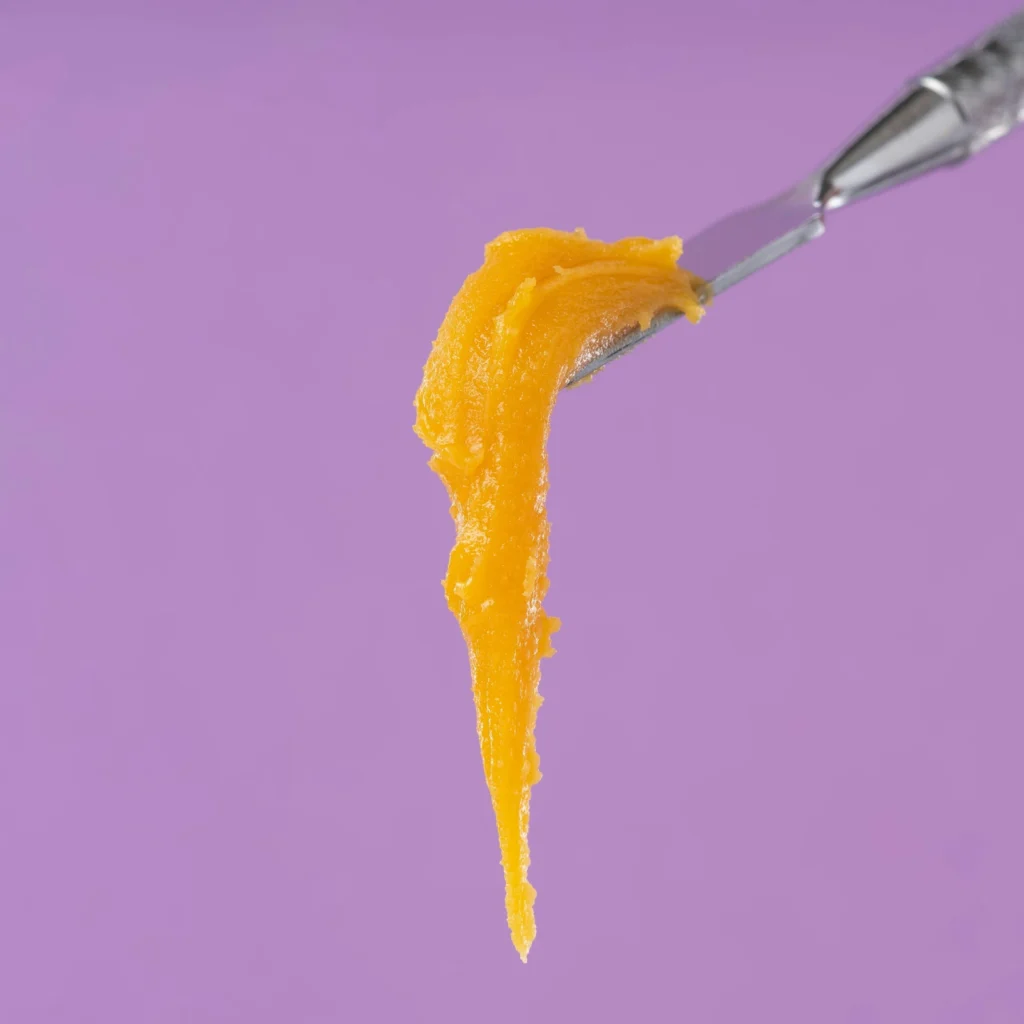
These words describe texture — what the concentrate looks and feels like. They’re a separate thing from resin, rosin, live, or cured.
- Sauce — a runny, liquid layer, often sitting on top of small crystals
- Badder — soft and whipped, like cake batter
- Sugar/Wax — grainy, more solid
- Diamonds — large individual crystals
- Shatter — hard and glass-like, snaps when broken
So if you see “live resin sauce” on a label, here’s what that’s telling you:
- Live → started as fresh-frozen plant material
- Resin → made with a solvent
- Sauce → this is what it looks like
Three words, three separate pieces of information.uring out how to reliably reproduce it.
How Are These Used?
Most of these concentrates are meant for dabbing or vaping. Some rosin is also sold pre-filled in vape cartridges instead of as a standalone concentrate. The extraction method won’t tell you what device you need. Check the specific product listing for that.
Three Quick Questions for Any Label
Next time you’re looking at a menu, ask yourself:
- Live or cured? Tells you what the plant looked like before extraction.
- Resin or rosin? Tells you how it was extracted (by solvent or by heat and pressure).
- What’s the texture? Sauce, badder, wax, and so on — just describes the look and feel.
That’s really all you need.
Common Mix-Ups
“Live resin and live rosin are the same.” Not quite. Both start fresh-frozen, but live resin uses a solvent and live rosin doesn’t.
“Rosin is just resin without chemicals.” Not exactly. Rosin is a completely different method, not resin with a step removed.
“Live means fresher on the shelf.” It doesn’t. “Live” describes the plant’s state before extraction, not the age of the product you’re buying.
“Solventless means healthier.” Not on its own. It just means no chemical solvent was used. Always look for products from a licensed, tested source.
Quick-Reference Chart
| Term | Starting Material | How It’s Made | Typical Texture |
| Resin | Usually dried, cured flower | Solvent-based | Varies (wax, badder, sauce) |
| Cured Resin | Dried, cured flower | Solvent-based | Varies (wax, badder, shatter) |
| Live Resin | Fresh-frozen flower | Solvent-based | Often saucy or batter-like |
| Rosin | Flower, kief, or hash | Heat + pressure (no solvent) | Varies — sticky to buttery |
| Live Rosin | Fresh-frozen flower or hash | Heat + pressure (no solvent) | Often whipped, badder, or sauce-like |
The Bottom Line
Every term on this list comes down to two questions: solvent or no solvent, and cured or fresh-frozen.
- Solvent-based, cured → resin
- Solvent-based, fresh-frozen → live resin
- Solventless, cured → rosin
- Solventless, fresh-frozen → live rosin
There’s no single “best” option here, just different processes and product styles that may appeal to different preferences. If a label ever has you second-guessing, that’s exactly what a budtender is there for.
Browse our concentrates selection with that framework in mind, and the menu should make a lot more sense next time around.
P.S. — the deals page has concentrates on it more often than you’d expect.
See you at Theo.